

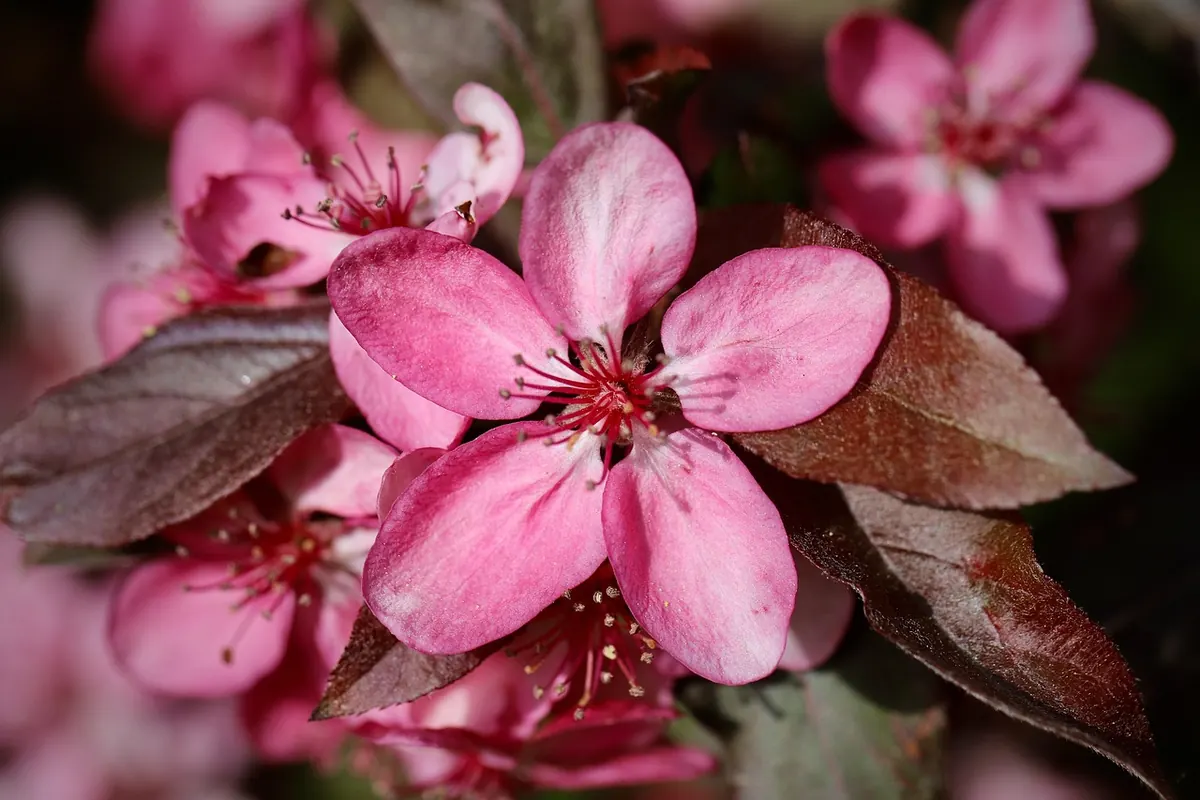
An apple tree in full bloom is a hopeful sight, but hope is not a pollination strategy. Most apples cannot set a good crop with their own pollen, and two trees that flower a fortnight apart might as well be in different gardens. The fix is simple enough: choose varieties whose blossom overlaps, and make sure at least one of them is a reliable pollen partner. That is what pollination groups are for.
Why Most Apple Trees Need a Partner
Apples are largely self-incompatible. Their flowers can receive pollen from the same variety, but the tree usually rejects it; the pollen is too closely related to be accepted. A different apple variety is needed to fertilise the flowers and start a crop. Some varieties set a little fruit on their own, and a few are described as partially self-fertile, but the crops are usually light and erratic. Even those trees crop better with a compatible partner nearby.
This is why a lone apple tree can flower beautifully and still drop almost every blossom. It is not necessarily a bad tree or a poor season. It may simply have no suitable pollen within reach. Apples are pollinated by insects, mainly bees, so the pollen parent also needs to be close enough for bees to move between the two trees while both are in flower. In practice, that means planting within about 20–30 metres in an open garden, or closer still if the site is exposed and bee traffic is thin. A tree in a neighbouring garden can help, but it is not a promise.
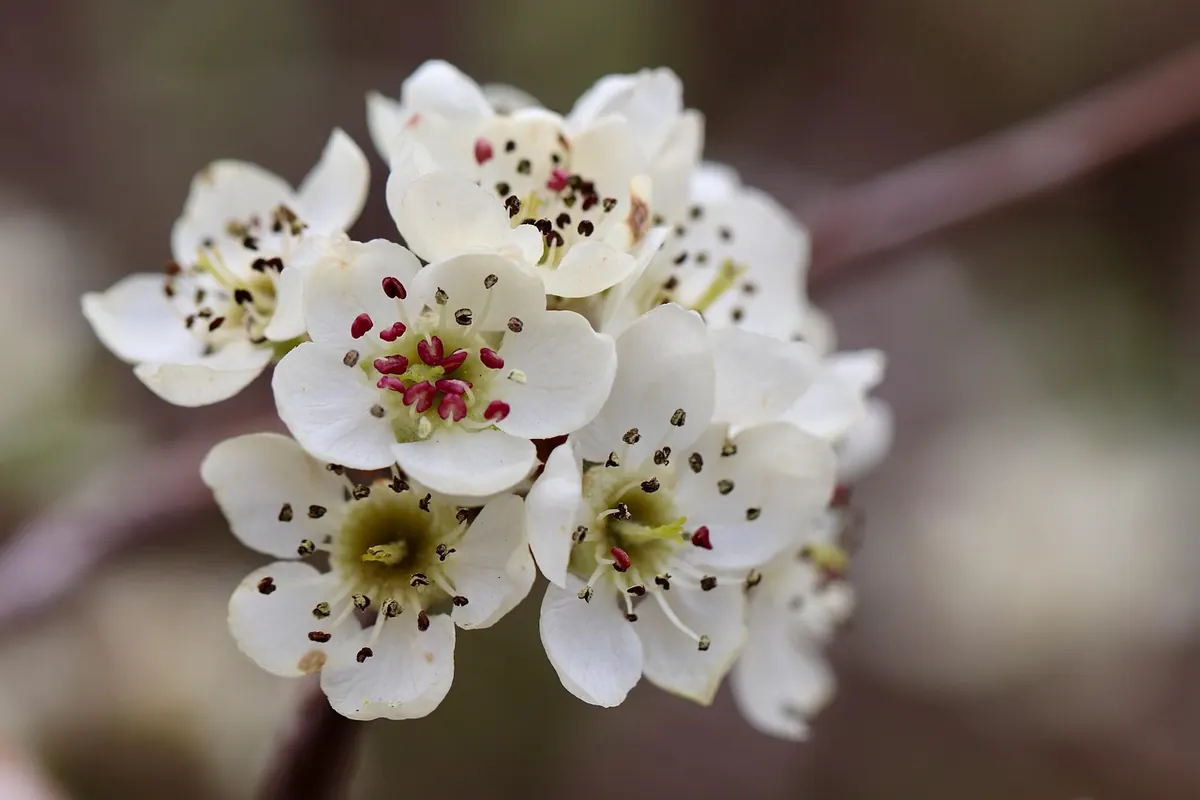
There is also a timing trap. Pollen is only useful while the receiving flower is receptive. Apple blossoms are receptive for a few days, and the whole flowering period for one variety may last a week or two, depending on weather. If the pollen parent is in full flower a week too early or too late, the crop can fail even though both trees are healthy. Warm, still weather brings bees out; cold, wet, windy weather keeps them down. That is why good pollination is part garden planning and part luck with the spring.
Pollination Groups Are a Blossom Calendar
Apple pollination groups are usually numbered 1 to 6 or 1 to 7, but the numbers are shorthand for flowering time. Group 1 is earliest, and the highest number is latest. The exact dates depend on your climate, the season, altitude, and even the side of the house. A variety listed as mid-season in a catalogue may open earlier in a warm coastal garden than in a cold valley. Treat the group as a relative guide, not a fixed diary.
Early, mid and late: what matters
Varieties in the same group normally overlap well. Varieties in adjacent groups often overlap enough, especially in a normal spring. A very early variety and a very late one usually miss each other. If you want to be safe, pick two varieties from the same group or one group apart, then add a third if you have space. A third variety is not just insurance: it can lengthen the picking season and spread the risk if frost or poor weather hits one variety at blossom time.
- Early: Discovery and other early dessert apples.
- Early mid: Katy and similar varieties.
- Mid: Cox’s Orange Pippin, Golden Delicious and many garden favourites.
- Late mid: Bramley’s Seedling, though it is triploid and cannot supply useful pollen.
- Late: Ashmead’s Kernel, Annie Elizabeth and other late-season apples.
These are typical examples, not fixed rules. Local flowering can shift by a week or more, and a cold spell can compress the whole sequence. The useful question is not “What number is it?” but “Will this tree’s flowers be open when the other tree is ready?” A simple notebook is more useful than a catalogue number: record the first open flower and the last flower on each tree in your own garden, and you will soon see which pairs actually overlap.
The Triploid Trap
Some apples are triploid. They carry an extra set of chromosomes and produce little or no viable pollen. Their own flowers can be pollinated by a diploid partner, but they cannot return the favour. Common triploids include Bramley’s Seedling, Jonagold and Mutsu. If you plant a triploid, you need at least two other diploid varieties nearby: one to pollinate the triploid and another to pollinate the pollinator. A single diploid beside a triploid is not a complete partnership.
Triploids are not bad trees. Bramley is a wonderful cooker, and Jonagold earns its place in many gardens. Just plan around their sterile pollen. If space is tight, choose diploid varieties instead. If you already have a triploid and only one other apple, consider adding a crabapple or a third eating apple rather than removing a tree you value.
How to Choose Compatible Varieties
Start with what you actually want to eat and grow, then check the pollination details before you buy.
- Pick for your climate and use first. A late-season apple that needs a long summer may not ripen in a short-season garden, however well it pollinates.
- Check the flowering group. Look for varieties in the same group or adjacent groups. Catalogue numbers vary between suppliers, so compare the words as well: early, mid, late.
- Identify triploids. If a variety is triploid, count it as a passenger for pollen, not a pollinator.
- Choose a reliable pollen partner. A mid-season diploid such as Golden Delicious is widely used because it flowers over a decent period and produces plenty of pollen. A crabapple can do the same job in a small garden.
- Look at neighbours. A nearby apple tree, even in the next garden, can pollinate yours if the blossom overlaps. Ask before you rely on it, and remember that a tree can be removed.
- Plant close enough. Bees move between trees more readily when the trees are near each other. A distance of 15–20 metres is comfortable; much beyond 30 metres, and the partnership becomes less dependable, especially in a windy site.
Distance, Bees and Garden Layout
Pollination is not just a matching game on paper. It is a journey made by insects. Bees tend to work a patch of flowers in a fairly local way, and they are more likely to move between two apple trees if the route is short and open. A hedge, a shed or a busy road can interrupt that route. So can a very wet or windy spring, when bees stay in the hive. Plant your partner tree within sight of the main tree if you can, and avoid hiding it behind a tall fence or a dense evergreen. In a small garden, a crabapple on a dwarfing rootstock can sit close to the main tree and flower over a long period. In an orchard, a row of pollinator trees every few rows is the traditional approach.
Weather matters too. A spell of cold rain at blossom time can ruin even a perfect pairing. That is one reason to grow more than two varieties where space allows: different varieties come into flower at slightly different times, so one may escape the worst of the weather. It is also a reason not to rely on a single neighbour’s tree. Gardens change, trees are felled, and a reliable partner this year may be gone in five.
A Simple Planting Plan
For a garden with room for two trees, choose two mid-season diploids that you actually like eating. Cox’s Orange Pippin and Golden Delicious are a classic pair, though Cox can be fussy in some soils. Katy with Discovery gives an earlier crop and a good overlap in many gardens. For a garden with room for three, include one early, one mid and one late, all diploids, and check that the early and mid overlap and the mid and late overlap. If you want Bramley, plant it with two diploids and accept that it is the passenger rather than the pollen source.
Pollination groups are a guide to timing, not a guarantee. The best partnership is two healthy trees, of compatible flowering time, planted close enough for bees, and pruned and fed so they flower well in the same spring.
If you are planting a single tree in a garden surrounded by other apples, you may get away with no partner of your own. If you are planting a lone tree in an open field, you will not. Check the flowering group, avoid relying on a triploid, and give bees a short, clear route between the blossoms. Do that, and the hopeful sight of full bloom has a much better chance of turning into a full crate.
Photo: Nennieinszweidrei / Pixabay