

A fruit tree that flowers beautifully and then sets nothing is one of the quiet disappointments of a garden. You wait all spring, watch the blossom come and go, and by July there are three small apples hanging where you expected a branch bent double. The tree is not being spiteful. Almost every failure to fruit has a nameable cause, and most of them can be corrected — sometimes within the season, more often by next spring.
These are the eight reasons that account for the great majority of empty branches, roughly in the order they deserve your attention.
When Pollination Fails
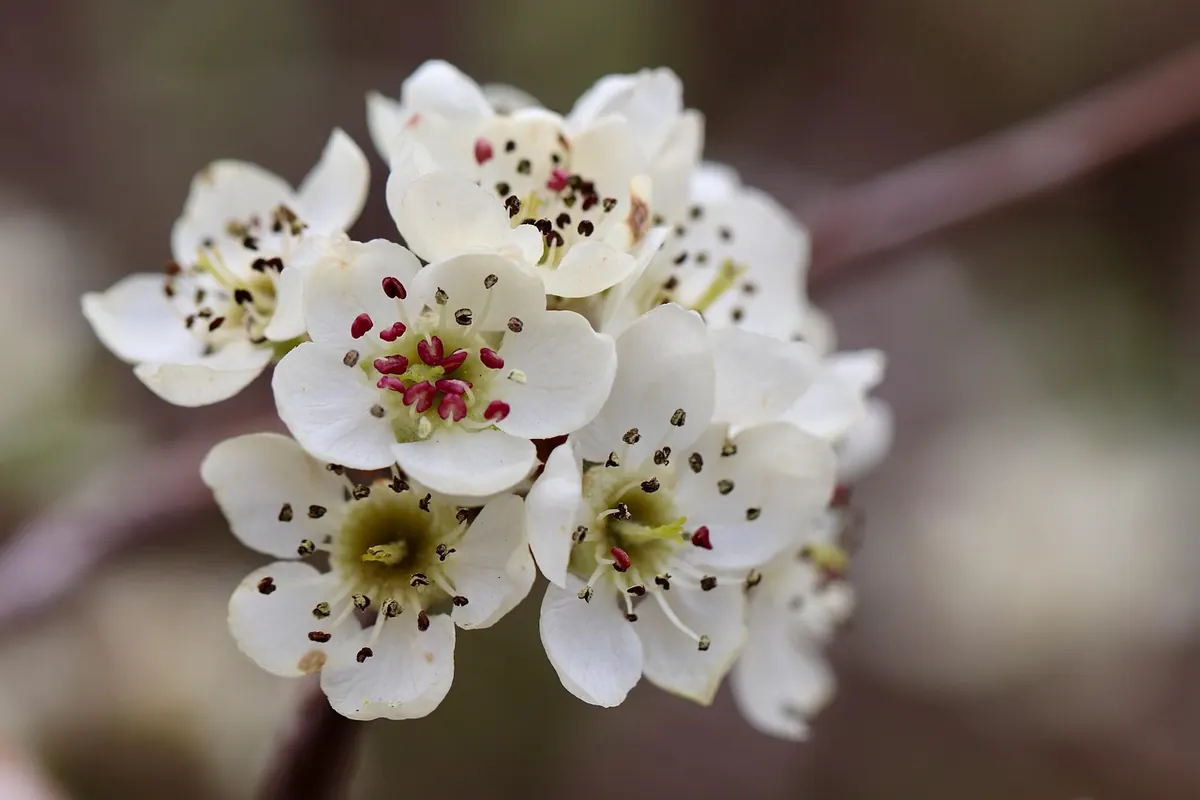
This is the first thing to rule out, because it explains more disappointment than anything else. Most apples, pears, plums, sweet cherries and many nuts need pollen from a different variety that flowers at the same time. A lone tree in a lawn, however healthy, will flower generously and set almost nothing.
The details matter. A pollination partner must be in the same or an adjacent flowering group, not simply another fruit tree in the garden. Some well-known varieties — 'Bramley', 'Jonagold', 'Boskoop' among the apples — carry sterile pollen and cannot pollinate anything, themselves included, so they need two other varieties nearby rather than one. Plums are fussier than they look; a single 'Victoria' will often crop on its own, while many dessert plums will not.
- Check what you planted. If the label doesn't say "self-fertile", assume it needs a partner.
- Confirm the partner flowers in the same fortnight, not three weeks later.
- A flowering crab apple covers a surprising number of apple varieties in one small tree.
- Distance counts: a partner within twenty or thirty metres, and visible to bees, works best.
- Never spray insecticide while the tree is in bloom.
Weather during flowering can undo the best planting plan. Bees stay in the hive in rain, in strong wind, and below about ten degrees, which is precisely the weather that often coincides with a fortnight of blossom. If the forecast is grim, hand-pollinate: take a soft brush or a rabbit's tail and move pollen from flower to flower on a dry, still morning. It sounds fussy. It works.
Pruning That Removes the Wood That Would Have Fruited
Trees fail to fruit in two opposite ways, and both come back to the secateurs.
A young tree pruned hard every winter answers with long, leafy whips and very few fruiting spurs. The tree is spending everything on growth. Tying or weighting branches towards the horizontal helps more than any cut, because a branch held flat slows its extension and starts producing spurs along its length.
The second error is the opposite: no pruning at all. An overgrown tree shades its own centre, the fruiting wood inside dies out, and the crop retreats to the sunny tips where the picker can't reach it. The remedy is a thinning over two or three winters, never one brutal session — take out a few crowded limbs, open the middle, and leave the short spurs alone.
Know what kind of bearer you have
Most apples and pears fruit on short spurs on older wood; a few, and most stone fruit, fruit at the tips of last year's shoots. Cutting back a tip-bearing tree in winter removes next summer's crop. If you don't know which yours is, prune lightly for a couple of years and watch where the flowers appear.
Frost, Rain, and a Bad Week in Spring
Apricots, peaches and early plums flower so early that a single clear, still night in March can take the whole crop. The flowers blacken in the centre and drop within days. Nothing later in the year will bring them back.
Where you plant matters as much as what you plant. Cold air pools at the bottom of a slope and behind a solid hedge, so a tree in a frost pocket will be hit while one ten metres uphill escapes. If you have a warm wall, use it for the earliest varieties. For established trees, fleece over the branches on forecast frost nights is worthwhile, and keeping the ground under the tree damp and grassy can hold blossom back a few days — a bare, warm border brings it on early, which is the last thing an apricot needs.
Cold wind and steady rain at flowering are almost as damaging as frost, since wet pollen does not germinate. There is little to do about the weather except choose late-flowering varieties next time and keep the tree in good condition so it can set what it can.
Youth, Old Age, and the Off Year
A young tree on a vigorous rootstock may take five, six, even eight years to settle into fruiting. That is normal, not a failure. Dwarfing rootstocks fruit earlier, and so do trees that are trained rather than left to grow straight up. If you are impatient, bend branches outwards, avoid rich nitrogen feeds, and keep the ground around the trunk clear rather than lush.
Old trees fail for the opposite reason: congested wood, exhausted soil, and spur systems that have died in the shade. Renovation takes a few years but usually works.
Then there is biennial bearing, the maddening habit of cropping heavily one year and resting the next. It happens because a heavy crop drains the reserves that would have fed next year's flower buds.
Thin in the heavy year, not the light one. A fruit every ten to fifteen centimetres along the branch in June looks like waste; it is what buys you a crop next summer.
Feeding, Water, and Roots Under Grass
A tree given plenty of nitrogen grows like a hedge and fruits like a hedge too — all leaf, no blossom. Fruit needs potassium and phosphorus, plus a soil that isn't wildly acid or waterlogged. A balanced spring feed followed by a potash-rich one in early summer suits most top fruit; a compost mulch in late winter does the rest without pushing soft growth.
Grass is the quiet thief. A tree standing in lawn is competing for every drop of water and every grain of nutrient, and in a dry June the tree loses. Clear a ring a metre across around the trunk, mulch it, and water deeply once a week in dry spells rather than little and often. Light matters too: less than half a day of direct sun, or a canopy so dense it shades itself, and the fruit buds simply don't form.
Pests, Disease, and Fruit That Disappears
Sometimes the tree sets well and the crop vanishes anyway. Bullfinches strip buds in winter, birds and squirrels take fruit at the colouring stage, codling moth and plum moth tunnel into the flesh, and brown rot turns ripening fruit to grey mush within days.
Don't confuse this with failure to set. Nor should you panic at the June drop, when a tree sheds quantities of small fruitlets — that is the tree regulating its own load. Netting, grease bands, clearing fallen fruit from the ground, and picking up mummified fruit still hanging in winter will deal with most of it.
A Practical Plan for Next Season
- Check the variety and its pollination partner before anything else.
- Prune lightly this winter, opening the centre, and leave the spurs.
- Clear and mulch a ring around the trunk; stop feeding nitrogen.
- Thin the fruit in June if the set is heavy.
- Watch the forecast at flowering, and hand-pollinate or fleece if frost threatens.
One season of observation is worth more than a shelf of books. Note when the tree flowers, what the weather does that fortnight, and where the fruit forms — the answer to why a particular tree didn't crop is usually written on the tree itself.
Photo: Nennieinszweidrei / Pixabay