



There is a moment, somewhere between the third basket of apples and the last of the pears, when the kitchen counter stops being a harvest and starts being a countdown. Fruit that tasted crisp at noon goes soft by evening; a single bruised plum can scent a whole bowl by morning. Storage is not one decision made at the end of picking day. It is a series of small ones, starting in the tree and finishing with a weekly walk past the crates with a torch and an empty bowl.
What follows is the routine used here at the orchard, adapted for a normal kitchen, a garage shelf, a shed or a spare fridge. None of it requires special equipment beyond crates, newspaper, and a little patience about not eating the best keepers first.
Pick for storage, not for tonight's dessert
The single biggest influence on shelf life happens before the fruit reaches the kitchen. Apples and pears destined for storage should be picked slightly underripe, when they still part from the spur with a gentle twist and lift rather than a tug. If the fruit drops into your hand without any resistance, it is already on its way to soft and should go straight to the eating bowl.
Handle everything as if it were an egg. A bruise you cannot see today becomes a brown, spreading patch in three weeks, and one rotting fruit in a crate shortens the life of everything touching it. Use a basket with a soft lining rather than a bucket, and never let fruit tumble from height into a pile. Pick in the cool of the morning if you can; fruit harvested in the heat of the afternoon carries that warmth into storage with it.
Sort the harvest before anything goes into the cold
Spread the harvest out on a table in a cool, shaded room and go through it piece by piece. This is the step most people skip, and it is the one that decides whether you lose one fruit or forty. Set aside, in separate bowls:
- Anything with a break in the skin — a bird peck, a wasp hole, a split from a fall. Eat, cook or freeze these within a day or two.
- Bruised or soft fruit — fine for sauce, chutney, crumbles or the freezer, but never for a storage crate.
- Fruit with no stem — the stem is a plug. Without it, the fruit loses moisture and lets rot in faster.
- Windfalls — treat as damaged by default, even if they look perfect.
- Perfect, firm, stem-on fruit — the keepers, and the only ones that go into long-term storage.
Do not wash fruit you intend to store. A little field dust is harmless; moisture sitting in the stem cavity or the calyx is not. Wipe dirty fruit with a dry cloth, or with a barely damp one, and let it dry completely before packing.
Cool it down fast, then keep it cool and steady
Fruit carries field heat, and field heat is the enemy. Get the harvest into a cool place as soon as it is sorted — a shaded shed, a cellar, the coolest room in the house — and then into its long-term spot. Aim for just above freezing for apples and most pears, roughly the temperature of a fridge, with high humidity and good air movement around the crates.
Fridge, cellar or garage shelf?
A spare fridge is the most reliable option for a small harvest. A cellar or insulated shed works well if it stays cold and does not swing between warm days and frosty nights; wide temperature swings cause condensation, and condensation causes rot. A garage shelf is fine in midwinter in a cold climate and hopeless in a mild one. Wherever you store, keep the crates off the floor, away from the wall, and out of direct light.
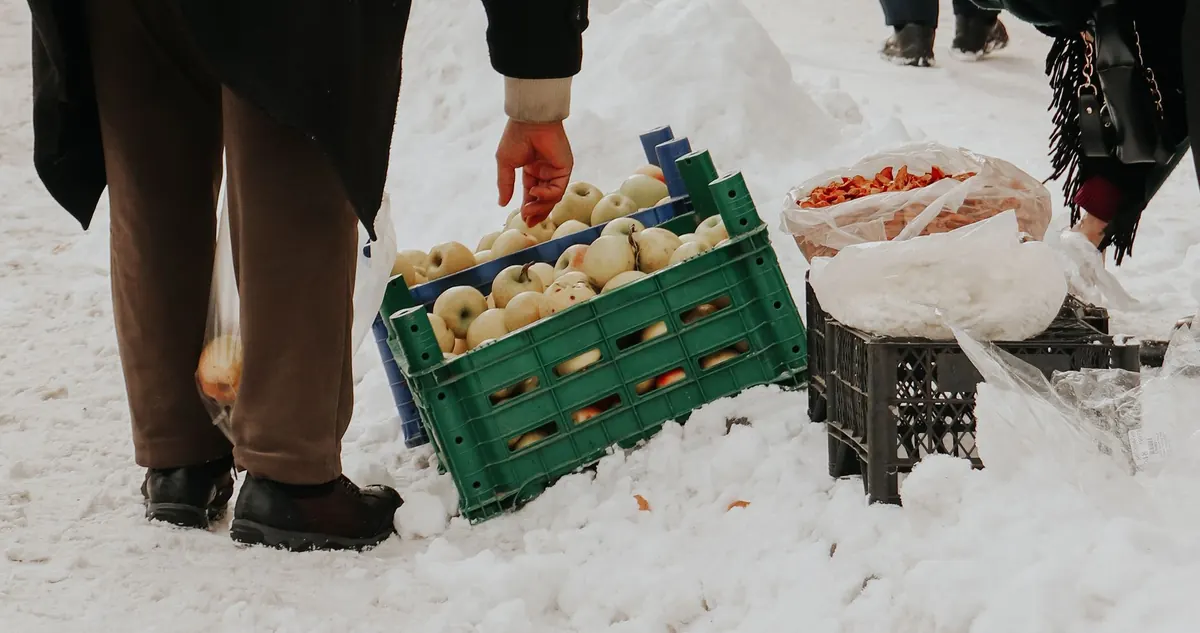
Airflow matters as much as temperature. Never seal fruit into plastic bags or closed bins; the trapped moisture will do the damage. Slatted wooden crates, cardboard boxes with holes punched in the sides, or shallow trays lined with newspaper all let the air move.
Wrapping and layering: how to pack a crate
- Line the container with newspaper or clean cardboard to absorb drips and cushion the bottom layer.
- Wrap apples and keepers individually in a square of newspaper, twisting the ends closed. It feels fussy for the first dozen and becomes automatic by the second crate. Wrapping slows moisture loss and, more importantly, stops one rotten fruit from touching its neighbours.
- Pack in a single layer, or two at most, with the wrapped fruit not quite touching. Deep crates crush the bottom row under the weight above.
- Place pears slightly apart and stem-up where possible; they bruise more readily than apples and dislike being crowded.
- Label the crate with the variety and the date. You will not remember in January.
Keep apples and pears away from vegetables, especially potatoes, and away from anything that ripens quickly. Ripening fruit gives off ethylene gas, which speeds up the decline of leafy greens and soft fruit nearby; a well-ventilated, separate corner solves most of it.
Apples, pears and stone fruit: three different briefs
Apples
Apples are the easiest keepers and the most forgiving. Late, firm varieties store for months; early, soft ones are best eaten within a few weeks and should not occupy crate space you will want later. Check that stored apples are firm and unblemished at packing time, keep them cold, and expect a little shrivelling by late winter — that is normal, and the fruit is still good for cooking.
Pears
Pears are picked hard and ripened off the tree, so storage and ripening are two separate jobs. Keep them cool and slightly underripe in the crate, then bring out only as many as you will eat in a few days and let them finish on the kitchen counter. Press gently near the stem with your thumb: when it gives slightly, the pear is ready. Refrigerating a fully ripe pear will not stop it going mealy, so ripen small batches and eat them.
Stone fruit
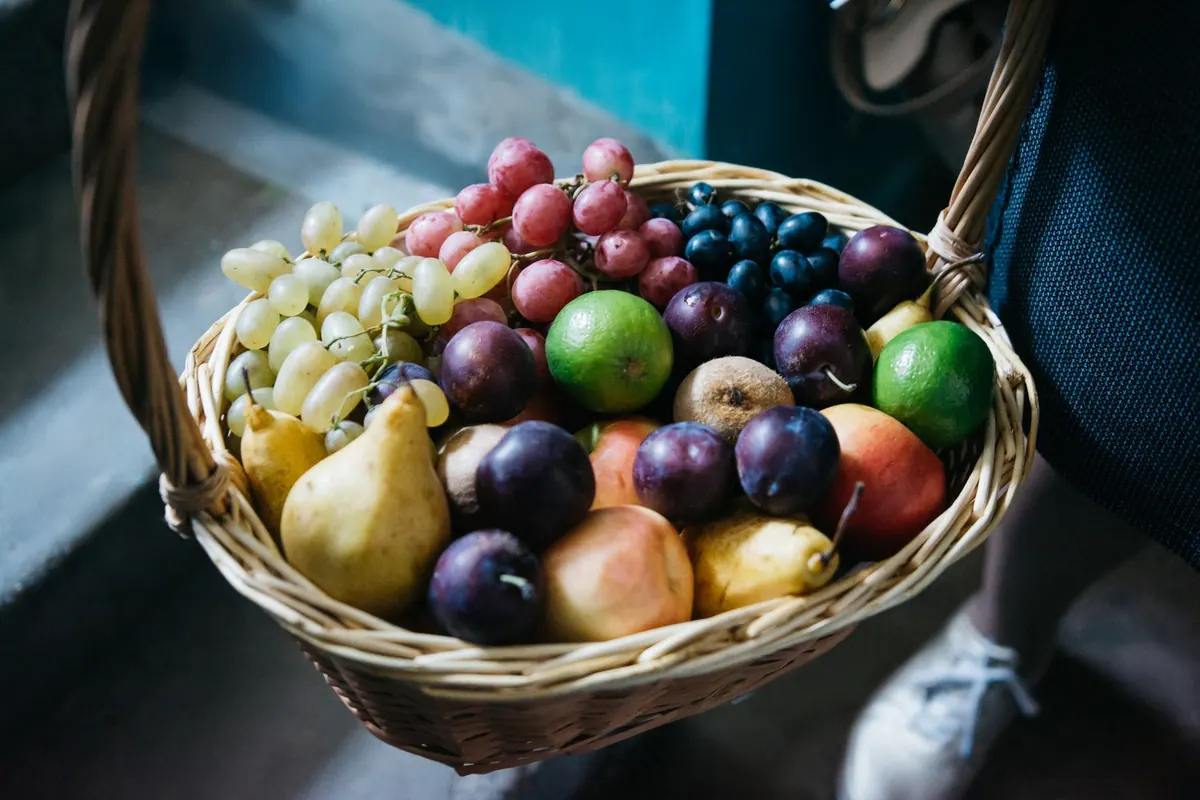
Peaches, nectarines, apricots, plums and cherries are short-distance runners. Never refrigerate stone fruit that is still hard — the cold stops ripening and leaves you with woolly, flavourless flesh. Ripen them in a single layer on a tray at room temperature, out of direct sun, then eat them or move them to the fridge for a few days at most. Cherries keep best cold, dry and with their stems on. For a glut, halve and stone the fruit and freeze it on a tray before bagging; that is a better use of space than watching a bowl decline.
The weekly check that saves the crop
Once a week, walk past the crates with a torch and an empty bowl. Pick up each fruit that looks suspicious, feel it, and remove anything soft, leaking or spotted. Do not put a doubtful fruit back to "see how it goes" — it will not improve, and it will take neighbours with it. Rot spreads fastest in a closed, still box, which is exactly why the weekly visit matters more than any clever packing trick.
If you find a patch of mould on one wrapped apple, throw out that apple, wipe the crate dry, and check everything it touched. Small, early losses are the price of a good system. Large, late losses usually mean the sorting step was rushed.
A storage routine worth keeping
Good storage comes down to four habits: pick a touch early, sort hard, cool fast, and look in often. Set up your crates on picking day rather than leaving the harvest in a heap overnight, keep a bowl by the door for the fruit that needs eating first, and write the date on every box. Do that, and the last apple of the season will still have a snap to it long after the tree is bare.
Photo: Beyza Kaplan / Pexels